Product Series

Pinqing offers the following product series (each produced to Chinese national standards; detailed specifications are on the product page):

Five Product Series in Detail

Positioning, key parameters and application summary for each series; please contact sales for the full specification sheet.

Fructo-oligosaccharide (FOS)

A prebiotic oligosaccharide supplied in type 55 and type 95 grades; liquid dry solids ≥75%, solid (powder/granule) moisture ≤5.0%, pH 4.5-7.0.

  • Water soluble, with about 30-60% of the sweetness of sucrose, allowing fine sweetness tuning in reduced-sugar formulas
  • Stable at neutral pH (4-7) and under normal sterilisation and baking, with little browning at high temperature
  • Used as a prebiotic ingredient in beverages, fermented dairy, infant formula and health foods
View product page

Isomalto-oligosaccharide syrup (IMO)

A functional oligosaccharide syrup based mainly on isomaltose, panose and isomaltotriose, supplied as IMO-50 and IMO-90; syrup dry solids ≥75%, pH 4.0-6.0, transmittance ≥95%; powder moisture ≤5%, solubility ≥99%.

  • About 40-60% of the sweetness of sucrose, mild and rounded with good flavour carrying
  • Heat and acid tolerant, suitable for bakery, dairy and acidic beverage systems
  • Provides both sweetness and texture control in dairy, lactic acid drinks and bakery

View product page

Flavoured syrup (custom / OEM)

Blended on a syrup base to the required flavour, sweetness and acidity, with OEM/ODM private-label production; flavour strength and Brix are confirmed by sampling.

  • Caramel, brown sugar, honey, vanilla and sea-salt vanilla directions are available (confirmed by sampling)
  • Private-label packaging and confidential formulation management supported
  • Suits fresh tea drinks, coffee chains, ice cream and bakery glazes

View product page

F90 HFCS (high-fructose syrup)

Fructose content (on dry solids) ≥90%, fructose + glucose ≥95%, dry solids ≥75%, pH 3.3-4.5, colour ≤50 RBU, transmittance ≥96%.

  • Relative sweetness about 1.2-1.6 times that of sucrose (sucrose = 1), increasing as temperature falls
  • Good humectancy, crystallisation resistance and high osmotic pressure, suited to reduced- and zero-sugar formulas
  • Used in cold drinks, jams, confectionery and bakery humectancy and browning

View product page

Standard HFCS (F42 / F55 / F60)

Three grades by fructose content: ≥42%/≥55%/≥60% (on dry solids), fructose + glucose ≥92%/≥95%/≥95%, dry solids ≥70.5%/≥76.5%/≥72.5%.

  • Clean sweetness, good humectancy and crystallisation resistance; readily interchangeable with sucrose
  • F42 for general sweetening and humectancy, F55 as the mainstream beverage grade, F60 for high-sweetness beverages and bakery
  • Used in carbonated and juice drinks, dairy drinks, bakery, canned fruit and fermentation

View product page

FOS or IMO: How to Choose

Both are functional oligosaccharides. They differ mainly in glycosidic structure, sweetness profile and process tolerance; they can also be used in combination.

FOS or IMO: How to Choose
ItemFructo-oligosaccharide (FOS)Isomalto-oligosaccharide (IMO)
Glycosidic bond and main componentsSucrose-type (beta-2,1 bonds), mainly GF2 to GF4Alpha-1,6 bonds, mainly isomaltose, panose and isomaltotriose
Standard grades (on dry solids)Type 55 ≥55%; type 95 ≥95%IMO-50 ≥50%; IMO-90 ≥90%
Relative sweetness (sucrose = 100)approx. 30-60approx. 40-60
Sweetness profileClean and pure, close to sucrose; suitable for blending with high-intensity sweetenersMild and rounded with good sweetness carry-over and flavour carrying
Process toleranceStable at neutral pH (4-7) and under normal sterilisation and baking; little Maillard browning at high temperatureHeat and acid tolerant; suits bakery, dairy and acidic beverage systems
Typical applicationsFibre-enriched beverages, fermented dairy, infant formula, health foodsDairy, bakery, beverages and lactic acid drinks, confectionery, functional foods
StandardGB/T 23528.2-2021GB/T 20881-2017

HFCS Grade Comparison: F42 / F55 / F60 / F90

The four grades differ in fructose content: the higher the grade, the sweeter the syrup and the stronger the cold-sweetness effect. Grade selection follows the sweetness target and process conditions of the finished product.

HFCS Grade Comparison: F42 / F55 / F60 / F90
ParameterF42F55F60F90
Fructose content (on dry solids)≥42%≥55%≥60%≥90%
Fructose + glucose (on dry solids)≥92%≥95%≥95%≥95%
Dry solids≥70.5%≥76.5%≥72.5%≥75%
pH3.3-4.53.3-4.53.3-4.53.3-4.5
Colour≤50 RBU≤50 RBU≤50 RBU≤50 RBU
Sulphated ash≤0.05 g/100g≤0.05 g/100g≤0.05 g/100g≤0.05 g/100g
Transmittance≥96%≥96%≥96%≥96%
Relative sweetness (sucrose = 1)approx. 1.0approx. 1.05approx. 1.1-1.2approx. 1.2-1.6 (sweeter at lower temperature)
Typical useGeneral sweetening and humectancy: beverages, bakery, canned fruitMainstream beverages: carbonated, juice, dairy drinksHigh-sweetness beverages, bakery browning and flavour carryingReduced- and zero-sugar formulas, cold drinks, jams, confectionery

Product Applications

Our full-spectrum products cover diverse food and beverage applications:

Beverages: carbonated, fruit-flavored, and functional drinks

Beverages

Standard and high-sweetness sugar source for carbonated, fruit-flavored, and functional drinks, refreshing and anti-crystallization.

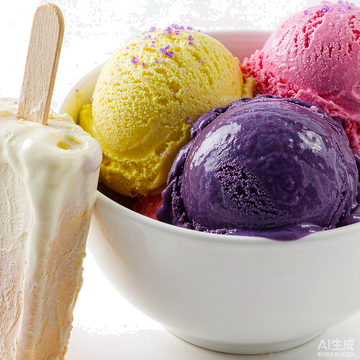
Ice cream and frozen drinks

Ice Cream & Frozen Drinks

Improves smoothness and suppresses ice crystal formation; caramel syrup used for toppings and flavored fillings.

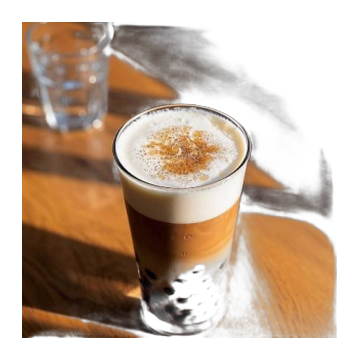
Milk tea and dairy beverages

Milk Tea & Dairy Drinks

Sweetness and texture adjustment for fermented milk, dairy drinks, and fresh-brewed teas.

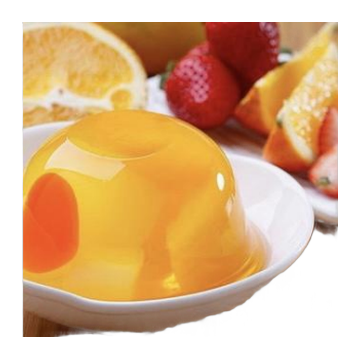
Jelly and confectionery

Jelly & Confectionery

Excellent compatibility with gel systems, clean sweetness, and uniform sweetness release.

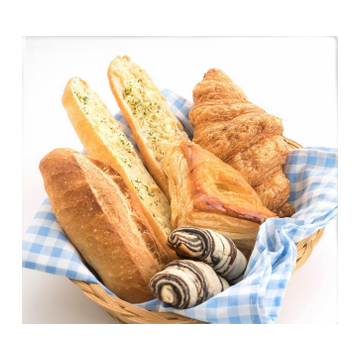
Baking industry

Baking

Moisture retention, anti-crystallization, and flavor carrier properties improve texture and shelf life.

Functional food and aquaculture

Functional Food & Aquaculture

Prebiotic applications of IMO syrup, and energy supplementation for aquaculture feed.

Beer brewing

Beer

Provides fermentable sugar source, helping regulate fermentation degree and body balance.

Canned fruit

Canned Fruit

Preserves aroma and color with stable osmotic properties, maintaining fruit shape and appearance.

Service Process

Customized delivery from requirements to mass production

1

Requirements

Understanding application scenarios, specifications, and flavor needs, defining specs and delivery schedule.

2

Sampling

Providing samples and small-batch trial orders (minimum 1 ton) to verify specifications and taste.

3

Production

Standardized production with 13% VAT invoice, factory-direct logistics or tanker delivery.

4

Ongoing Service

Stable supply and quality tracking, supporting reorder and formula iteration.

Product Selection and FAQs

Common questions on grade selection, specification data and commercial terms; contact our sales team for further detail.

How do I choose an HFCS grade (F42 / F55 / F60 / F90)?

Select by the sweetness target and process conditions of the finished product: F42 for general sweetening and humectancy, F55 as the mainstream beverage grade, F60 for high-sweetness beverages and bakery browning, and F90 for reduced- and zero-sugar formulas and blended sweetener systems.

What are the key parameter differences between F42 / F55 / F60 / F90?

See the comparison table on this page: fructose content ≥42%/≥55%/≥60%/≥90%, fructose + glucose ≥92%/≥95%/≥95%/≥95%, dry solids ≥70.5%/≥76.5%/≥72.5%/≥75%, pH 3.3-4.5 for all grades, colour ≤50 RBU and transmittance ≥96%.

Should I choose FOS or IMO?

Choose FOS (type 55/type 95) when the focus is fibre enrichment, infant formula or health foods; choose IMO (IMO-50/IMO-90) when sweetness and texture control in dairy, bakery and beverages is the priority. The two can also be blended in one formula.

Can I obtain specification sheets and sample plans for all series at once?

Yes. Contact the sales team to receive specification sheets, packaging options, samples and batch certificates of analysis (COA) for all five series in one request.

Do the products contain genetically modified material?

Products are made from starch and sucrose by enzymatic conversion and separation/purification. If a project requires non-GMO (IP) statements or system documents, please confirm this at the enquiry stage; the formal documents provided prevail.

What are the standard packaging and minimum order quantity?

Standard packaging is 25 kg drums (liquid) and 25 kg bags (solid); 1,000 kg IBC totes and food-grade bulk tankers are also available. The MOQ for customised and private-label orders is 1 tonne, with small trial orders accepted.

Get Product Specifications

Contact us for dry-solids specs, fructose content and COA reports

Contact Us